What Commercial Reroofing Is and the Two Approaches
Before weighing the options, it helps to understand what commercial reroofing involves and how the two main approaches differ. The choice between them shapes the whole project. Here is what reroofing is and the two approaches for a Seymour commercial building.
Reroofing a Commercial Building
Reroofing means replacing a commercial roof that has reached the end of its useful life with a new roofing system that restores reliable protection. When a roof has aged out, deteriorated, or begun to fail in ways that repairs can no longer effectively address, reroofing is the answer. For a Seymour building, reroofing is a major investment that protects the structure for years to come. The process can be approached in two fundamentally different ways, which is the first decision to make. Understanding that reroofing is not a single method but a choice between approaches is the starting point for making the right decision about how to replace your commercial roof and protect your building.
The Layover Approach
A layover, also called a recover or overlay, installs a new roofing system directly over the existing roof without removing it. The old roof stays in place and becomes the substrate for the new one, which saves the cost and labor of removal and disposal. For a Seymour building, a layover can be a cost effective way to reroof when the conditions are right. This approach is faster and less disruptive than removing the old roof, but it has important limitations, since it cannot address problems hidden in or beneath the existing roof. Understanding what a layover is, a new roof installed over the old, is the first half of the layover versus tear off decision that every commercial reroof involves.
The Tear-Off Approach
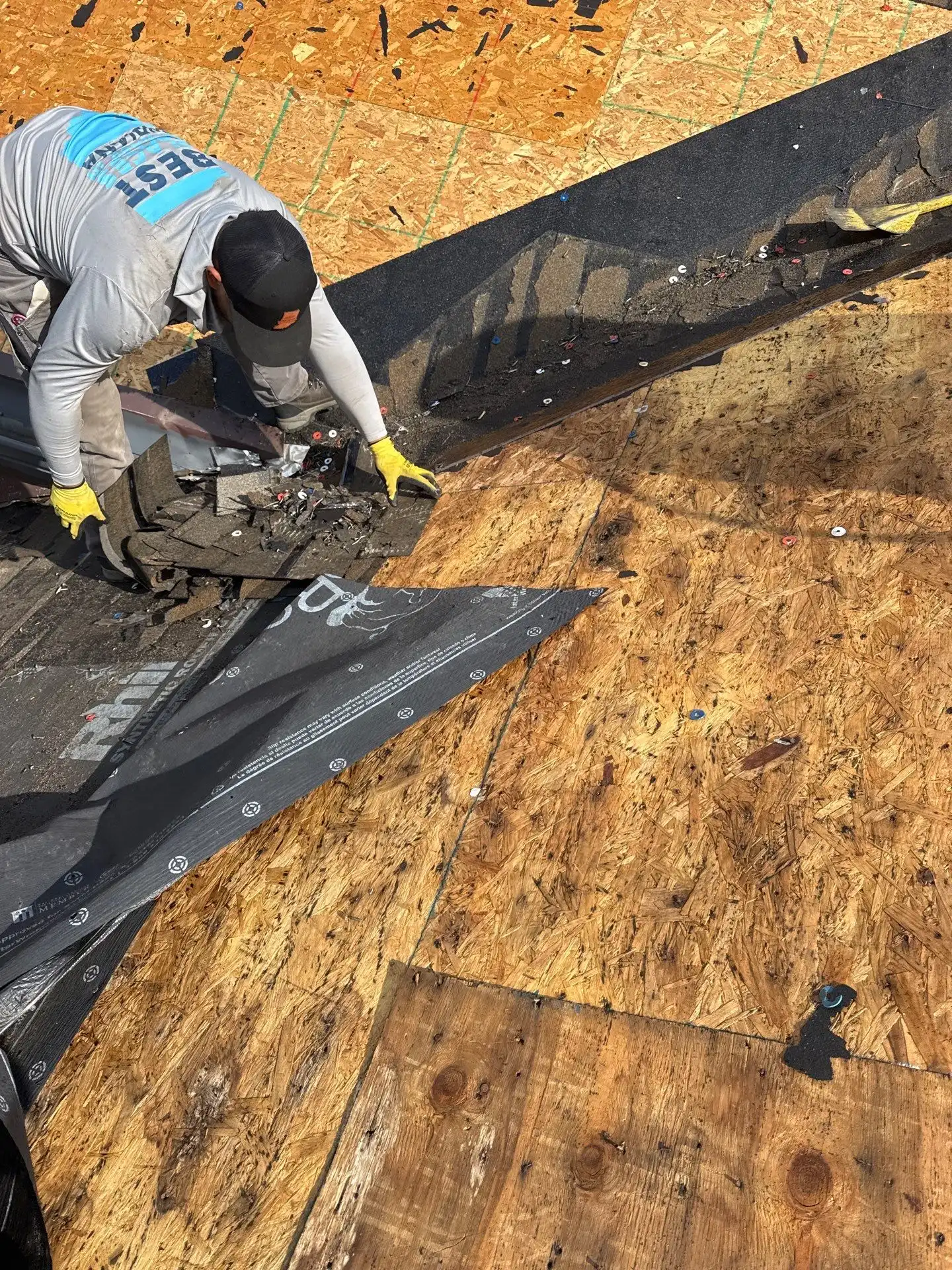
A tear off removes the existing roof entirely, down to the deck, before installing a new roofing system. Everything above the deck comes off, the deck is inspected and repaired as needed, and a complete new roof is built from there. For a Seymour building, a tear off is the more thorough approach, since it addresses everything and starts fresh. This approach costs more and involves more work than a layover, but it allows hidden problems like wet insulation to be removed and the roof to be completely reset. Understanding what a tear off is, the full removal and replacement of the roof, is the second half of the layover versus tear off decision that determines how a commercial roof is replaced.
Why the Choice Matters
The choice between layover and tear off matters because it affects the cost, the disruption, and most importantly the long term result. A layover saves money when it fits, but doing one over a compromised roof traps problems that cause the new roof to fail early. A tear off costs more but is sometimes the only sound choice. For a Seymour building, getting this decision right protects both the budget and the building. Choosing the wrong approach can lead to a reroof that disappoints, either by overspending on a tear off where a layover would do, or by saving money on a layover that should have been a tear off. The decision genuinely matters to the outcome.
A Decision Based on Condition
The right approach depends primarily on the roof's actual condition, not on a preference for one method or the price difference alone. Whether the existing roof is dry and sound, how many layers it already has, and whether the deck is in good shape all determine which approach fits. For a Seymour building, this means the decision rests on an honest assessment of the roof's condition rather than a default choice. A roof that is dry and sound with one layer may be a good candidate for a layover, while one with wet insulation or two existing layers needs a tear off. The condition drives the decision, which is why a proper inspection comes first.
Getting the Right Approach
Getting the right approach for your building means having the roof assessed honestly and matching the method to its condition, which is what a knowledgeable contractor provides. Rather than pushing one approach, a good contractor evaluates the roof and recommends what genuinely fits. For a Seymour building, that honest recommendation is the key to a reroof that serves the building well. Seymour Commercial Roofing assesses each commercial roof and recommends layover or tear off based on its actual condition, not on what is easiest to sell. Getting the right approach is the foundation of a successful reroof, since the method must match the roof, and a proper assessment is what ensures it does.
Two Approaches, One Right Choice
Commercial reroofing means replacing a worn roof, and it can be done two ways, a layover that installs new over old, or a tear off that removes the old roof first. The choice matters and depends on the roof's condition, which is why an honest assessment determines the right approach for a Seymour building.
One point worth emphasizing about the layover versus tear off decision is that it should never be made on price alone. The cheapest option up front, a layover, is genuinely the smart choice when the existing roof is dry, sound, and single layer, but the same layover becomes the most expensive choice in the long run if it covers wet insulation or a failing deck, since the trapped problems cause the new roof to fail prematurely. For a Seymour building, this is why an honest assessment matters more than a quick quote. Seymour Commercial Roofing bases its recommendation on what the roof actually needs, since matching the method to the roof's condition is what protects both the budget and the building over time.
Get the Right Reroofing Approach
Facing a commercial reroof? Call Seymour Commercial Roofing at (765) 676-3491 for a free inspection of your Seymour building. We assess your roof honestly and recommend whether a layover or a tear off genuinely fits, so your reroof serves your building and budget well.