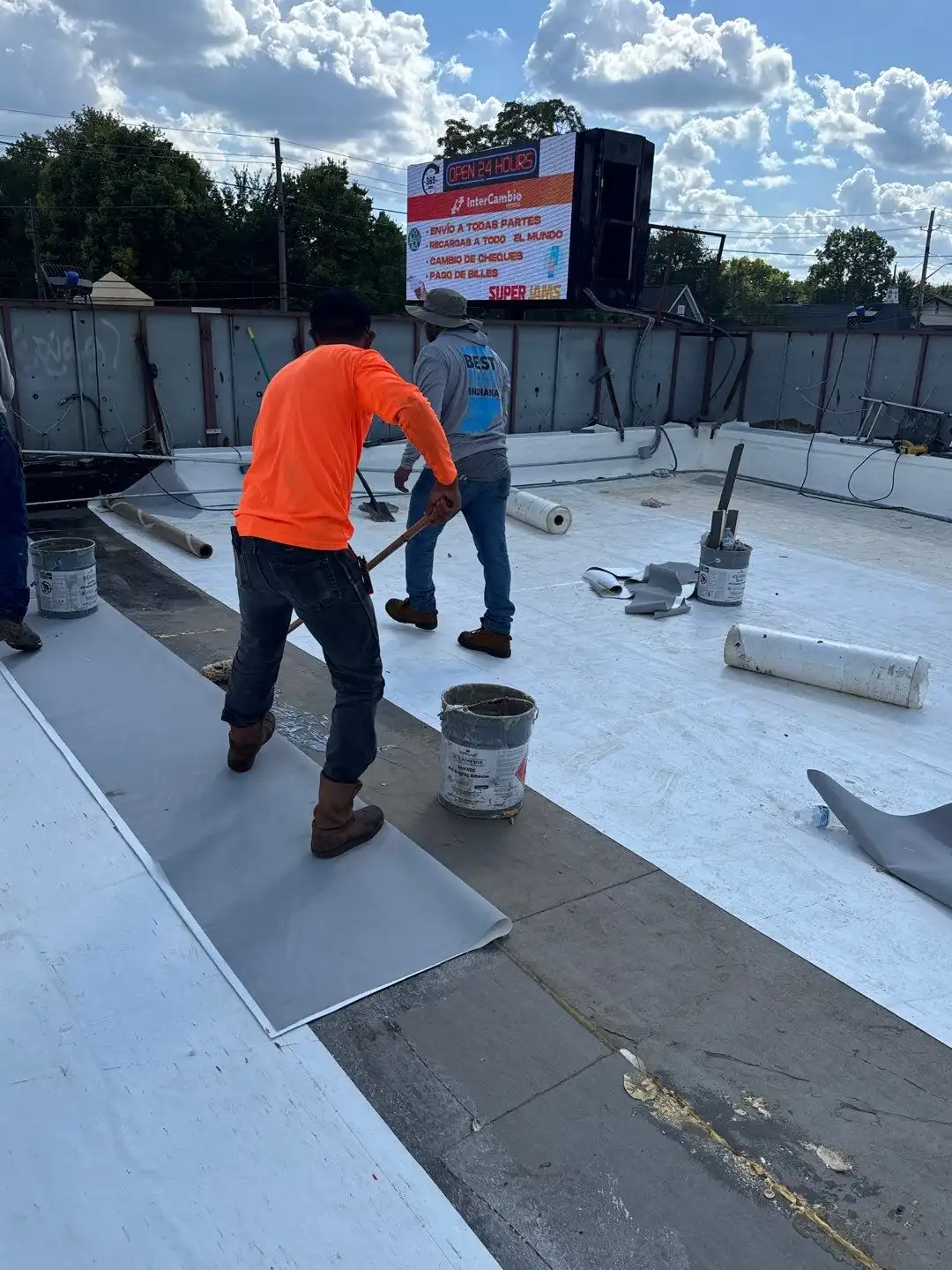
The main flat roof systems at a glance
Before matching a system to your Seymour building, it helps to know the main options and what each is known for. Four systems cover most commercial flat roofs, each with a distinct profile that makes it the best fit for certain buildings.
TPO
TPO is the most installed flat roof membrane, known for a reflective white surface that helps cool the building, welded seams that form a strong continuous bond, and a reasonable cost. It commonly serves past twenty years and suits clean, simple roofs where its reflectivity and value shine. For a building prioritizing energy savings and cost effectiveness on a straightforward roof, TPO is often the strongest candidate, which is part of why it is so widely chosen.
EPDM
EPDM, the black rubber membrane, has one of the longest proven track records and excels in cold weather, handling freeze thaw cycles with decades of demonstrated durability. It comes in large sheets with fewer seams and sits at a competitive cost. Its black surface absorbs heat, which can raise cooling costs but is acceptable or mildly beneficial in heating season. For a Jackson County building valuing proven longevity and cold performance, EPDM is a strong fit.
PVC
PVC is the premium membrane built to resist grease, chemicals, and ponding water that degrade other systems. It costs more, but for buildings with that exposure, the premium is essential rather than optional. Restaurants, food service, and process buildings, or any flat roof with chronic ponding, are PVC territory. For a Seymour building with grease or chemical exposure, PVC is the best, and often the only suitable, choice despite its higher cost.
Modified bitumen and built up
Modified bitumen and built up roofing are multi ply asphalt based systems with a long history and good durability, particularly for roofs with foot traffic. They offer a tough, redundant build with multiple layers and sit in the middle of the cost range. For a building with significant rooftop traffic or where a proven multi ply system is preferred, these are sensible choices, valued for their toughness and track record.
Different profiles for different buildings
Each system's profile, TPO's reflective value, EPDM's proven cold durability, PVC's chemical resistance, modified bitumen's traffic toughness, makes it the best choice for buildings that need its strengths. None is universally best, and the variety exists because buildings differ. For a Jackson County owner, knowing these profiles is the foundation for matching the best system to the building, which the rest of this guide helps you do.
Find the system that fits your building
The broader point is that choosing a flat roof system is an exercise in matching, not in finding a single winner, because the systems exist precisely because buildings differ. A Seymour owner who resists the urge to ask which system is best in the abstract, and instead asks which fits this building, arrives at a far better decision. The right flat roof is the one whose strengths line up with the building's needs, and that alignment is what produces decades of dependable service rather than an early failure.
Finally, because the best flat roof system depends so heavily on the specific building, an accurate recommendation requires a real look at how the building is used, what the roof faces, and its condition. A owner who gets a professional assessment learns not only which system fits but whether any considerations specific to the roof should shape the choice. That assessment turns a general comparison into a confident, building specific decision about a roof meant to protect the building for decades.
It also helps to weigh the choice over the full life of the roof rather than at purchase, since a flat roof is a long commitment and the cheapest or most premium first cost rarely reflects the best value. A Jackson County owner who considers cost per year, the system's fit, and the quality of installation together makes a sounder choice than one fixated on the upfront number. The system that matches the building and lasts its full life is the real value, regardless of where it sits on first cost.
The broader point is that choosing a flat roof system is an exercise in matching, not in finding a single winner, because the systems exist precisely because buildings differ. A Seymour owner who resists the urge to ask which system is best in the abstract, and instead asks which fits this building, arrives at a far better decision. The right flat roof is the one whose strengths line up with the building's needs, and that alignment is what produces decades of dependable service rather than an early failure.
Finally, because the best flat roof system depends so heavily on the specific building, an accurate recommendation requires a real look at how the building is used, what the roof faces, and its condition. A owner who gets a professional assessment learns not only which system fits but whether any considerations specific to the roof should shape the choice. That assessment turns a general comparison into a confident, building specific decision about a roof meant to protect the building for decades.
It also helps to weigh the choice over the full life of the roof rather than at purchase, since a flat roof is a long commitment and the cheapest or most premium first cost rarely reflects the best value. A Jackson County owner who considers cost per year, the system's fit, and the quality of installation together makes a sounder choice than one fixated on the upfront number. The system that matches the building and lasts its full life is the real value, regardless of where it sits on first cost.
The broader point is that choosing a flat roof system is an exercise in matching, not in finding a single winner, because the systems exist precisely because buildings differ. A Seymour owner who resists the urge to ask which system is best in the abstract, and instead asks which fits this building, arrives at a far better decision. The right flat roof is the one whose strengths line up with the building's needs, and that alignment is what produces decades of dependable service rather than an early failure.
Finally, because the best flat roof system depends so heavily on the specific building, an accurate recommendation requires a real look at how the building is used, what the roof faces, and its condition. A owner who gets a professional assessment learns not only which system fits but whether any considerations specific to the roof should shape the choice. That assessment turns a general comparison into a confident, building specific decision about a roof meant to protect the building for decades.
Seymour Commercial Roofing helps Seymour owners understand these systems and match the best one to their building's needs, then installs it to last. Call (765) 676-3491 to find out which flat roof system fits your building. Matching the system to the building is what separates a smart investment from an expensive guess.